How to Price Your Des Moines Rental Property in 2026
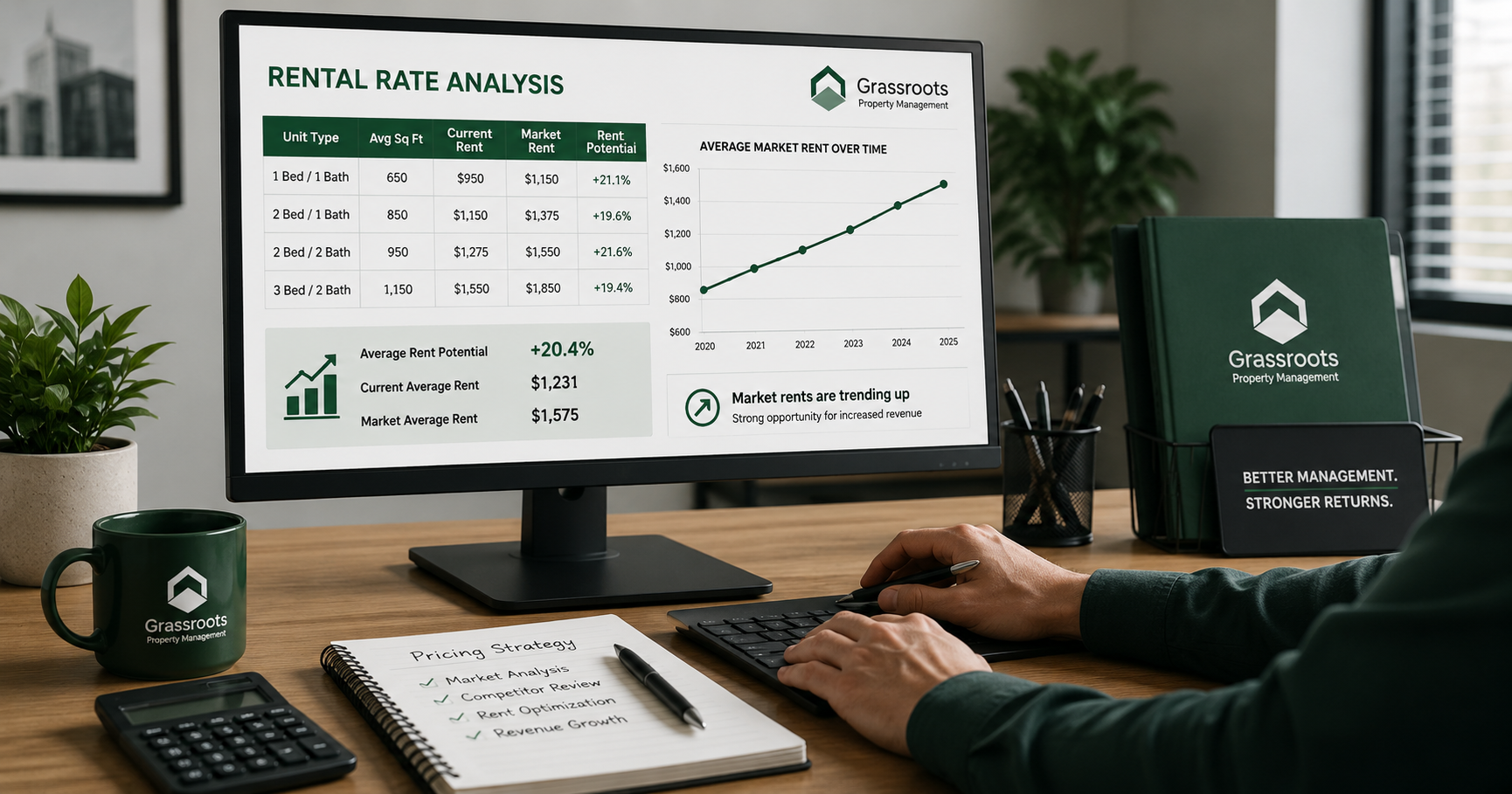
Pricing a rental property sounds simple. Pick a number, post it, see if anyone bites. In practice, it's one of the decisions that most directly determines your annual return — and one of the areas where small landlords most consistently leave money on the table or price themselves into extended vacancy.
In Des Moines's current market — rent growth of 2.8% projected in 2026, average occupancy around 93.5%, and strong demand in suburban submarkets — there's real room to push rents if you price intelligently. Here's how to do it.
Know What the Market Is Actually Paying
The most common pricing mistake is using what you need to make rather than what the market will pay. Your mortgage payment, your expenses, your target return — none of these determine your market rent. What comparable units in your specific neighborhood are actually leasing for does.
Where to Look
Zillow Rental Manager and Apartments.com — Search active listings and recent rentals in your zip code. Filter by unit type, bedroom count, and approximate square footage.
Rentometer — A paid tool that aggregates rent data by address and shows you percentile ranges for your specific location.
Craigslist — Still a significant part of the Des Moines rental market, particularly for working-class neighborhoods. Active listings give you a real-time read on what competing landlords are asking.
Your property manager — A good PM does rent analysis as a standard part of the service and has access to actual closed lease data, not just asking prices.
Des Moines Rent Benchmarks by Unit Type (2026)
These are approximate market-rate figures for a well-maintained unit in an average Des Moines neighborhood:
Unit TypeAvg. Monthly RentStudio$8401 Bedroom$9922 Bedroom$1,102–$1,168 (apartment vs. house)3 Bedroom$1,445–$1,479
Suburban Premium
Units in Ankeny, Waukee, and Johnston command 10–20% above these averages, driven by school district demand and newer construction stock.
Neighborhood Discount
Properties in some central Des Moines neighborhoods — higher crime pockets, lower income areas — will rent at 15–25% below these averages regardless of the unit's condition.
Location sets the ceiling. Condition and management set where within that range you land.
The Factors That Move Your Price Within the Range
Once you know your market range, these factors determine where your specific unit prices.
Condition and Finish Level
Updated kitchens, renovated bathrooms, new flooring, and fresh paint command top-of-range pricing. Dated but functional units rent at the middle of the range. Poor condition units price at the bottom — or don't rent at all.
Included Utilities
If you pay water, trash, or gas, the effective rent is higher than the stated rent. Adjust your listed price to reflect the value of what's included. Tenants comparison-shop on all-in cost, not headline rent.
Parking and Amenities
In-unit washer/dryer or hookups, garage parking, and off-street parking all justify premium pricing in Des Moines. These are meaningful amenities in Iowa's climate.
Pet Policy
Allowing pets — with appropriate deposits and fees — opens your pool to a larger applicant set and often allows you to command a monthly premium just by simply supply and demand. Restricting pets narrows the pool. Make sure to take notes on pet policies, and compare rents with that in mind.
Lease Term
Shorter lease terms (6-month leases) typically justify a 5–10% premium over 12-month leases because of the additional turnover risk you're accepting.
When to Push Rents vs. When to Hold
This is the strategic question that separates good landlords from great ones.
Push Rents When
Your unit has been below market for 12+ months
You're at or near full occupancy
The local market is absorbing inventory quickly (current Des Moines conditions favor this)
You're renewing a long-term tenant who has been paying below market
You've made significant improvements to the property
Hold Rents When
Your current tenant has been excellent — reliable payment, good care of the property
You're in a slower leasing season (November–January in Des Moines is slower)
The unit has a specific issue (deferred maintenance, location challenge) that limits your applicant pool
You've already had one vacancy in the trailing 12 months
The Renewal Math
If a tenant is paying $1,050 and market is $1,150, pushing to market at renewal seems like a straightforward $100/month gain.
But if the tenant leaves and the unit sits for 30 days, you've lost $1,150 in that month plus turnover costs. The rent increase pays back in 11.5 months.
That's fine if the tenant was marginal — it's not fine if they were excellent and would have stayed for $1,075.
A $25–$50 below-market renewal for a reliable tenant often generates better risk-adjusted returns than a market-rate replacement.
Seasonal Pricing in Des Moines
Des Moines has a real leasing season. Activity peaks in spring and early summer (March–July) when families are moving between school years and the weather is cooperative. Activity slows meaningfully in November through January.
Practical Implications
If a lease is expiring in December or January, price slightly below market to reduce vacancy risk. A unit that sits empty through winter is expensive.
If a lease expires in April or May, you have pricing leverage — demand is at its highest and you can push harder.
If you're renewing a good tenant whose lease expires in July, consider offering a lease that runs through the following May or October rather than the standard 12 months. Aligning your lease expirations to the peak leasing season gives you options.
The Most Common Pricing Mistakes
Pricing Based on Your Expenses
The market doesn't care about your mortgage. If your expenses require $1,400/month and comparable units rent for $1,100, you have an acquisition problem — not a pricing problem.
Anchoring to Last Year's Rent
Iowa rents grew 2.8% in 2026. A unit that rented for $1,050 last year should be reviewed against current market, not automatically renewed at the same rate.
Overpricing and Sitting
Every week a vacant unit sits costs you money. Overpricing by $75/month costs you $900/year. If you'd have been vacant an extra three weeks at the overpriced number, you've already lost more than you'd have made.
Not Adjusting for Condition
A landlord who prices a dated unit at top-of-market because that's what newer units are getting will sit on vacancy while better-finished units fill. Honest condition assessment leads to faster leasing at the right price. This is a common mistake when using tools such as Rentometer or Zestimate, as they can’t account for finish levels.
Ignoring Included Amenities
A unit that includes a washer/dryer should price higher than one that doesn't. Many landlords list both at the same number and leave value on the table.
Quarterly Rent Review
Pricing isn't a set-it-and-forget-it decision. Market conditions change, and your rents should keep pace.
A quarterly rent review — checking comparable active listings and recently leased units against your current portfolio — takes 30 minutes per property and keeps you from drifting below market without noticing. It also prepares you for renewal conversations with data rather than guesswork.
At Grassroots Property Management, rent analysis is a standard part of our annual reporting. Our owners always know where their units sit relative to market — and they have the information they need to make smart renewal and pricing decisions.
The Bottom Line
Pricing your Des Moines rental correctly is one of the highest-leverage operational decisions you make as a landlord. Too low and you leave money on the table year after year. Too high and you sit vacant. The right number, adjusted seasonally and reviewed quarterly, maximizes your return while keeping good tenants in place.
If you'd like help benchmarking your current rents against the Des Moines market, that's a conversation we're happy to have.
Book a free rental analysis consultation with Grassroots Property Management:
Schedule a Consultation