What Des Moines ADU Zoning Actually Means for Rental Property Owners
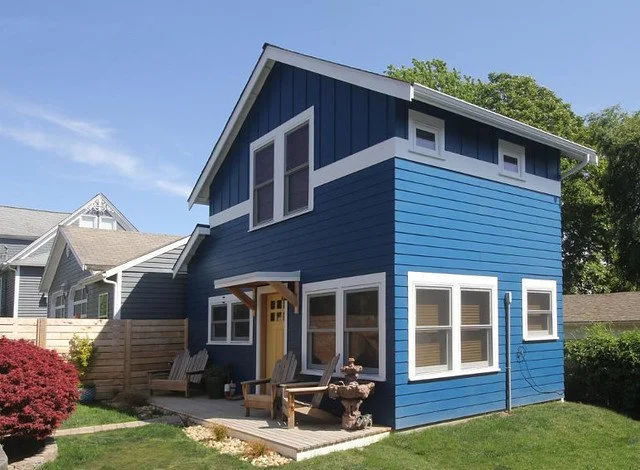
ADUs yet, you're leaving a rental unit on the table.
In July 2025, Iowa passed a statewide law permitting one accessory dwelling unit per residential lot across the state. Des Moines already had its own ADU ordinance in place - updated in 2022 to expand the number of qualifying properties by up to four times - but the state law reinforces and extends that access across the broader metro. For small investors in the Des Moines area, this is one of the most significant zoning changes in years.
Here's what you actually need to know.
What Is an ADU?
An accessory dwelling unit - sometimes called a granny flat, in-law suite, or carriage house - is a fully self-contained secondary housing unit on the same lot as a primary residence. It has its own kitchen, bathroom, and sleeping area. In Des Moines, they're technically referred to as Accessory Household Units (AHUs), but the concept is the same.
ADUs come in several forms:
- Detached backyard structures - a separate building in the rear yard
- Garage conversions - converting an existing attached or detached garage
- Interior conversions - partitioning off part of the primary home, including basement units
- Additions - building a new addition onto the existing structure
What Des Moines Specifically Allows
Des Moines allows ADUs in most residential zones, subject to the following rules:
- Maximum size: The larger of 1,000 square feet or 50% of the primary home's floor area
- Location: Detached ADUs must be in the rear yard
- Setbacks: At least 5 feet from any lot line
- Height: Cannot exceed the maximum height permitted for the primary structure
- Quantity: One ADU per lot maximum
- Permitting: All ADUs require permits through the Permit & Development Center before work begins
One thing worth noting: Iowa's statewide law includes an owner-occupancy requirement - either the primary home or the ADU must be owner-occupied. This is an important distinction for investors. If you own a rental property but don't live there, check with the city on how this applies to your specific situation before you start planning.
The Tax Abatement Nobody Talks About
This is the part most landlords miss entirely.
The City of Des Moines currently offers a 10-year tax abatement on the value that an ADU adds to your property. That means if building an ADU increases your assessed value by $80,000, you won't pay taxes on that additional $80,000 for a decade.
For a property investor, that's a meaningful subsidy on what is already one of the most capital-efficient ways to add a rentable unit to your portfolio. You own the land. The infrastructure is already there. You're not buying a new property - you're extracting more income from one you already have.
What Does It Actually Cost?
ADU construction costs in Des Moines typically fall into these ranges:
- Garage conversion or interior basement conversion: $50,000-$100,000
- New detached structure: $100,000-$150,000+
The wide range reflects finish level, size, and whether utility connections need to be added. Before budgeting, you'll need to verify with Des Moines Water Works, MidAmerican, and any relevant cable or telecom providers what utility hookups will require.
Financing options include home equity lines of credit (HELOCs), cash-out refinancing, or renovation loans like Fannie Mae's HomeStyle or FHA's 203(k) rehab product.
Does the Math Work for Investors?
Let's run it simply. If a detached ADU costs $120,000 to build and rents for $900/month in a Des Moines neighborhood:
- Annual gross rent: $10,800
- Gross yield on construction cost: ~9%
- 10-year tax abatement saves additional thousands depending on your assessed rate
That's before accounting for the appreciation in property value the ADU creates. In a market where Des Moines home prices rose 6.2% year-over-year in Q1 2026, a well-built ADU adds real equity on top of the income stream.
Who Should Be Looking at This?
ADUs make the most sense for investors who:
- Already own a single-family property with underutilized rear yard space
- Have an attached or detached garage that's not generating income
- Have a basement that could be safely converted to a livable unit
- Are looking to increase cash flow without purchasing a new property
If you're managing a property in Ankeny, Waukee, Johnston, or other metro suburbs, check with your city's community development department directly - ADU rules vary by municipality even within the Des Moines metro, and some cities are still finalizing their ordinances in response to the 2025 state law.
The Bottom Line
An ADU is one of the few tools that lets a small investor add a rental unit without buying a new property. Between Des Moines' permissive zoning, the 10-year tax abatement, and Iowa's statewide tailwind, the regulatory environment has never been more favorable. The question is whether your specific property qualifies and whether the numbers work.
If you're not sure where to start, that's exactly the kind of conversation we have with property owners at Grassroots Property Management. We manage properties, but we also help owners think through the strategic decisions because better-performing assets are good for everyone.
Ready to take management of your rentals off your back? Book a free consultation